


Glass Wool Panel
Your Professional Glass Wool Panel Supplier
Langfang Henggang Energy Saving Technology Co., Ltd. was established in 2020 and specializes in producing high-quality insulation materials, including rock wool, glass wool, and rubber & plastic products. Our factory is equipped with advanced production lines and core equipment, including automated systems and testing facilities. We have a skilled team focused on quality control, customer service, and innovation. With multiple production lines and a strong R&D capacity, we serve both domestic and international markets. Our products meet strict quality standards, ensuring reliable performance for industries such as construction, petroleum, power, and transportation.


Why choose us
Certifications
Our products are ISO9001 \CE and SGS certified, ensuring compliance with global quality and safety standards, which enhances their credibility in international markets.
Sales Markets
These products not only meet the needs of the domestic market, but are also exported to the United States, Russia, Canada, Poland, Korea, India, Saudi Arabia and many other countries and regions.
Quality Assurance
We maintain a comprehensive quality assurance system to monitor production processes closely, ensuring the highest quality insulation materials that meet both domestic and international standards.
Technical Support
Our experienced team is dedicated to continuous improvement, with a focus on R&D and optimizing production processes, allowing us to meet both domestic and international customer requirements.
Glass Wool Board
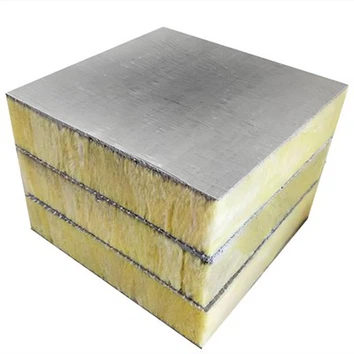
Glass Wool Board is an insulation material composed of molten glass spun into fine fibers, which are then compressed into rigid panels. These boards are engineered to endure temperatures typically ranging from 600°C to 1000°C, depending on the formulation. They are lightweight yet highly resistant to heat, fire, and chemical degradation. The fibers are held together with binders that maintain structural integrity even under extreme conditions. The boards are usually faced with a protective coating or foil to enhance durability and ease installation. Their porous structure traps air, providing excellent thermal resistance, which helps reduce heat transfer. This makes them ideal for insulating furnaces, boilers, and other high-temperature industrial equipment. Their non-combustible nature also contributes to fire safety, making them a preferred choice in safety-critical applications.
|
Brand |
Henggang |
Product Categories |
Glass wool insulation |
|
Compressive Strength |
300MPa |
Color |
Yellow |
|
Bending Strength |
Excellent |
Material |
Glass wool |
|
Thermal Insulation Coefficient (normal temperature) |
0.034 |
Application |
Building thermal insulation |
Advantages of Glass Wool Board
Highly efficient thermal insulation
The dense glass wool structure effectively reduces heat transfer and energy loss.The high content of fiber filaments forms a good thermal insulation layer, which improves overall energy efficiency.
Strong sound absorption
They can absorb and reduce noise spread, improving the indoor and outdoor acoustic environment.They are suitable for noisy industrial environments and living spaces that require a quiet atmosphere.
Good fire resistance
Glass wool panels have good non-combustible properties, providing basic fire protection.They meet the fire safety requirements of many building standards.
Energy saving
They do not contain harmful substances, are environmentally friendly, and meet green building standards.They help reduce greenhouse gas emissions and support the goal of sustainable development.
Sturdy and durable
The high-density material has good compressive strength and deformation resistance.It maintains stable physical properties for a long time and has good durability.
Convenient construction
The panel form is easy to transport and store, simplifying the installation process.They can be quickly and easily installed on a variety of flat or curved surfaces.
Wall & Partition Insulation
Used in interior drywall partitions to reduce noise between rooms in offices and apartment buildings.
Installed in hospitals and classrooms to ensure speech privacy and enhance comfort for occupants.
HVAC & Ductwork Systems
Lined inside air ducts to prevent heat loss and improve the energy efficiency of commercial HVAC systems.
Wrapped around ventilation shafts to reduce noise transmission and avoid condensation issues.
Roof & Ceiling Insulation
Placed above false ceilings in shopping malls to regulate temperature and block rooftop noise.
Installed in residential attics to minimize heat transfer and lower year-round energy usage.
Fire-Resistant Enclosures
Applied behind cladding systems and elevator shafts to prevent flame spread during emergencies.
Used in critical zones like escape corridors and engine rooms for enhanced passive fire protection.

How It Works of Glass Wool Board
Manufacturing
Molten glass is spun into fine fibers, then collected and compressed into dense panels. Binders and coatings are added to enhance strength and resistance.
Installation Preparation
Panels are cut to size and shape according to the application, ensuring proper fit and coverage.
Placement
The boards are installed onto surfaces such as pipes, walls, or equipment, often secured with mechanical fasteners or adhesives.
Sealing & Finishing
Edges and joints are sealed to prevent heat leaks and improve insulation performance.
Operational Use
The insulation maintains high-temperature environments, reducing heat loss and protecting equipment and personnel from heat exposure.
Maintenance & Inspection
Periodic checks ensure the boards remain intact and effective, with replacements made as needed to sustain performance.
Production Process of Glass Wool Board
Raw Material Melting
Natural minerals such as quartz sand and limestone, along with chemical raw materials such as soda ash and borax, are mixed and melted into molten glass in a furnace at temperatures above 1450℃.
Fiber Forming
The molten glass is passed through a high-speed centrifuge to form fiber bundles. After spraying with phenolic resin binder, it is cured by hot pressing. The fiber diameter is controlled within 8μm, and different densities of three-dimensional cross-structures can be obtained by adjusting the centrifugal speed.
Curing Treatment
The fibers are cured to form a stable board structure. Some products also undergo polishing, adhesive spraying, paper application, or embossed surface treatment to achieve a surface flatness of ±0.5mm and offer a variety of color options.

1. The use temperature of Glass wool board shall be controlled between -120 ℃ and 400 ℃, and larger thermal insulation performance error will be generated if the temperature exceeds this range.
2. For outdoor use, Glass wool board with strong weather resistance shall be selected.
3. During construction, the surface of Glass wool board shall be protected from pollution and damage.
4. The use of Glass wool board shall comply with Building code and safety standards, and it is strictly prohibited to expose directly inside the building.
Maintenance
Avoid Exposure
After use, ensure the glass wool boards are not exposed to the elements to prevent performance degradation due to sunlight, rain, etc.
Regular Inspection
Regularly inspect the condition of the glass wool boards. Replace them promptly if aging or damage is observed.
Control the Operating Environment
Avoid prolonged exposure of the glass wool to harsh environments such as high temperature and humidity, strong acids, and strong alkalis.
FAQ
We're well-known as one of the leading glass wool panel manufacturers and suppliers in China, featured by quality products and good price. Please rest assured to buy high-grade glass wool panel for sale here from our factory.
glass wool acoustic board, Fire Rated Glass Wool Board, fire resistant fiberglass board