

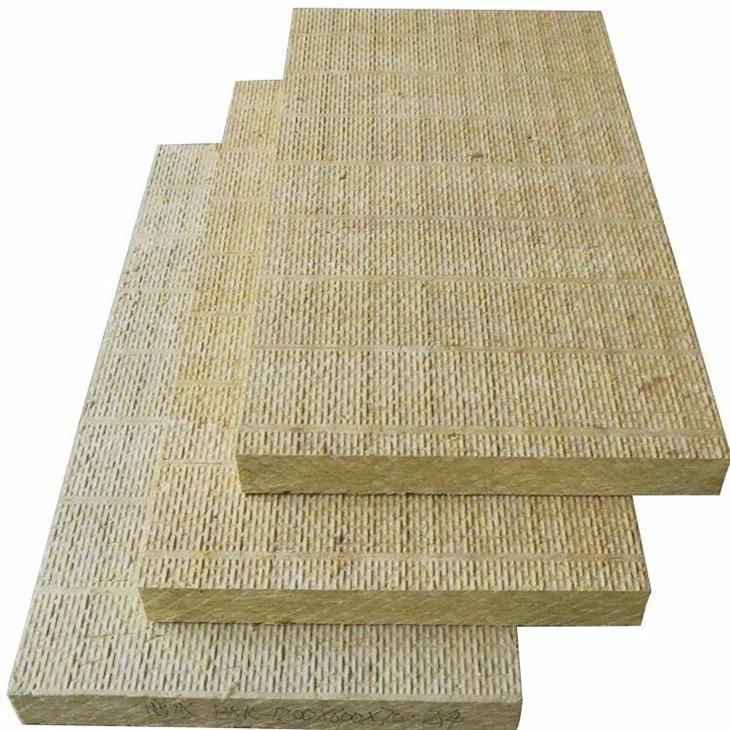
As a supplier of Rockwool Composite Panels, I am often asked about the dimensional stability of our products. Dimensional stability is a crucial factor in many construction and insulation applications, as it ensures that the materials maintain their shape and size over time, even under varying environmental conditions. In this blog post, I will delve into the topic of whether Rockwool Composite Panels have good dimensional stability, exploring the factors that influence it and the benefits it offers.

Understanding Dimensional Stability
Dimensional stability refers to the ability of a material to resist changes in its dimensions, such as length, width, and thickness, when exposed to different environmental factors. These factors can include temperature variations, humidity, and mechanical stress. A material with good dimensional stability will maintain its original shape and size, minimizing the risk of warping, cracking, or other forms of deformation.
Factors Affecting the Dimensional Stability of Rockwool Composite Panels
Raw Materials
The quality and characteristics of the raw materials used in Rockwool Composite Panels play a significant role in their dimensional stability. Rockwool, which is the core material of these panels, is made from natural volcanic rock that is melted and spun into fibers. High-quality rockwool fibers have a low coefficient of thermal expansion, meaning they expand and contract very little with changes in temperature. This inherent property of rockwool contributes to the overall dimensional stability of the composite panels.
Manufacturing Process
The manufacturing process of Rockwool Composite Panels also affects their dimensional stability. Advanced manufacturing techniques ensure that the rockwool fibers are evenly distributed within the panel, creating a uniform structure. Additionally, the panels are typically cured and bonded under controlled conditions, which helps to set the shape and dimensions of the panels and reduce the potential for shrinkage or expansion.
Environmental Conditions
While Rockwool Composite Panels are designed to be dimensionally stable, extreme environmental conditions can still have an impact on their performance. For example, prolonged exposure to high temperatures or high humidity levels can cause the panels to expand or contract slightly. However, the high-quality rockwool used in our panels has a high resistance to temperature and humidity changes, minimizing these effects.
Benefits of Good Dimensional Stability
Structural Integrity
One of the primary benefits of having good dimensional stability in Rockwool Composite Panels is the maintenance of structural integrity. In construction applications, panels that maintain their shape and size over time provide a stable and reliable building envelope. This is especially important in areas where the panels are subject to mechanical stress, such as in high-rise buildings or industrial facilities.
Energy Efficiency
Dimensional stability also contributes to the energy efficiency of Rockwool Composite Panels. When panels fit tightly together without gaps or warping, they create a continuous insulation barrier. This reduces air leakage, which is a major cause of energy loss in buildings. By maintaining their dimensions, the panels can effectively retain heat in the winter and keep cool air inside during the summer, leading to lower energy consumption and cost savings.
Aesthetics
In addition to structural and energy efficiency benefits, good dimensional stability also enhances the aesthetics of a building. Panels that do not warp or crack over time maintain a smooth and uniform appearance, contributing to the overall visual appeal of the structure. This is particularly important in architectural applications where the exterior finish of the building is a key design element.
Real-World Applications and Performance
Rockwool Composite Panels have been widely used in various construction projects around the world, and their dimensional stability has been proven in real-world applications. For example, in commercial buildings, these panels are used for exterior wall insulation, where they are exposed to different weather conditions throughout the year. Despite the temperature and humidity variations, the panels maintain their shape and size, providing long-lasting insulation and protection.
In industrial settings, Rockwool Composite Panels are used for fireproofing and insulation of pipes and equipment. The dimensional stability of these panels ensures a proper fit and effective insulation, even in high-temperature environments. This not only enhances the safety of the facility but also improves its operational efficiency.
Comparing with Other Insulation Materials
When compared to other insulation materials, Rockwool Composite Panels often have an advantage in terms of dimensional stability. For instance, some traditional insulation materials like fiberglass may be more prone to settling and shrinking over time, which can lead to gaps in the insulation and reduced performance. On the other hand, the dense and uniform structure of rockwool in our composite panels provides better resistance to these issues, ensuring consistent insulation performance.
Our Product Range and Dimensional Stability
As a supplier, we offer a wide range of Rockwool Composite Panels, including Rockwool Acoustic Insulation Board, Rock Wool Board with Embedded Wire Mesh, and Insulation Rock Wool Board. All of our products are manufactured using high-quality rockwool and advanced production techniques to ensure excellent dimensional stability.
We conduct rigorous quality control tests on our panels to ensure that they meet the highest standards of dimensional accuracy. These tests include measuring the dimensions of the panels before and after exposure to different environmental conditions, such as temperature cycling and humidity tests. By doing so, we can guarantee that our customers receive panels that will perform consistently over time.
Conclusion
In conclusion, Rockwool Composite Panels have excellent dimensional stability due to the high-quality raw materials, advanced manufacturing processes, and inherent properties of rockwool. This dimensional stability offers numerous benefits, including structural integrity, energy efficiency, and aesthetics. Whether you are working on a commercial building, an industrial facility, or a residential project, our Rockwool Composite Panels can provide reliable insulation and performance.
If you are interested in learning more about our Rockwool Composite Panels or have any questions regarding their dimensional stability, please feel free to contact us for a detailed discussion. We are always ready to assist you in finding the best insulation solution for your specific needs.
References
- "Rockwool Insulation Handbook," Rockwool International.
- "Dimensional Stability of Building Materials," Building Science Corporation.
- "Insulation Materials and Their Properties," National Research Council.